

What Bahá’ís Believe
Bahá’u’lláh and His Covenant
Overview
- What Bahá’ís Believe
- Overview
- Bahá’u’lláh and His Covenant
- The Life of the Spirit
- God and His Creation
- Essential Relationships
- Universal Peace
- What Bahá’ís Do
The Bahá’í Faith began with the mission entrusted by God to two Divine Messengers—the Báb and Bahá’u’lláh. Today, the distinctive unity of the Faith They founded stems from explicit instructions given by Bahá’u’lláh that have assured the continuity of guidance following His passing. This line of succession, referred to as the Covenant, went from Bahá’u’lláh to His Son ‘Abdu’l-Bahá, and then from ‘Abdu’l-Bahá to His grandson, Shoghi Effendi, and the Universal House of Justice, ordained by Bahá’u’lláh. A Bahá’í accepts the divine authority of the Báb and Bahá’u’lláh and of these appointed successors.
These holy Manifestations have been as the coming of springtime in the world…For each spring is the time of a new creation…
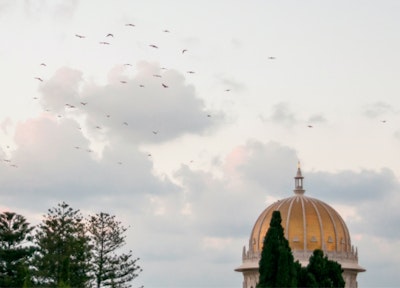
1819-1850
The Báb is the Herald of the Bahá’í Faith. In the middle of the 19th century, He announced that He was the bearer of a message destined to transform humanity’s spiritual life. His mission was to prepare the way for the coming of a second Messenger from God, greater than Himself, who would usher in an age of peace and justice.
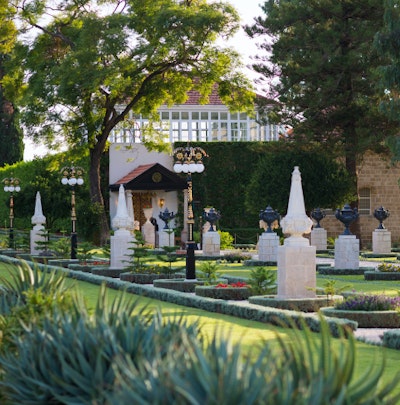
1817-1892
Bahá’u’lláh—the “Glory of God”—is the Promised One foretold by the Báb and all of the Divine Messengers of the past. Bahá’u’lláh delivered a new Revelation from God to humanity. Thousands of verses, letters and books flowed from His pen. In His Writings, He outlined a framework for the development of a global civilization which takes into account both the spiritual and material dimensions of human life. For this, He endured 40 years of imprisonment, torture and exile.
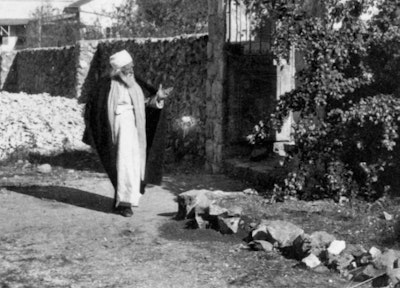
1844-1921
In His will, Bahá’u’lláh appointed His oldest son, ‘Abdu’l-Bahá, as the authorized interpreter of His teachings and Head of the Faith. Throughout the East and West, ‘Abdu’l-Bahá became known as an ambassador of peace, an exemplary human being, and the leading exponent of a new Faith.
1897-1957
Appointed Guardian of the Bahá’í Faith by ‘Abdu’l-Bahá, His eldest grandson, Shoghi Effendi, spent 36 years systematically nurturing the development, deepening the understanding, and strengthening the unity of the Bahá’í community, as it increasingly grew to reflect the diversity of the entire human race.
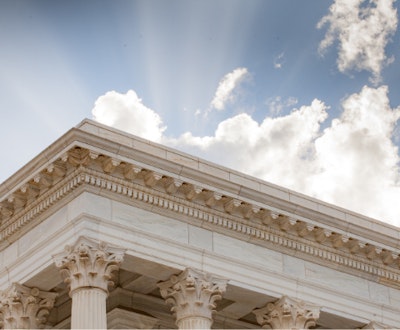
Established 1963
The development of the Bahá’í Faith worldwide is today guided by the Universal House of Justice. In His book of laws, Bahá’u’lláh instructed the Universal House of Justice to exert a positive influence on the welfare of humankind, promote education, peace and global prosperity, and safeguard human honour and the position of religion.


